
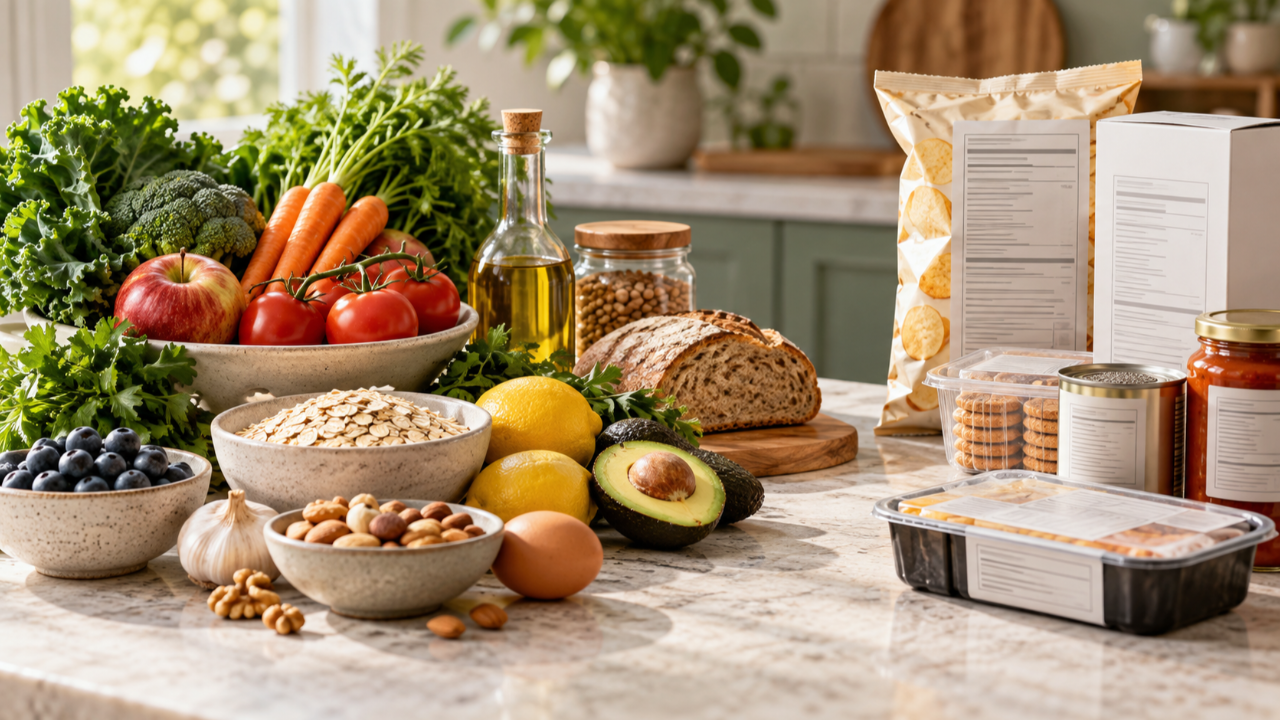
Food additives and ultra-processed food: what matters at the grocery store
Aug 01, 2026Food additives and ultra-processed food received considerable federal attention in 2026. The FDA proposed requiring companies to notify it when they determine that a new ingredient is generally recognized as safe. Federal agencies have also been working on a consistent definition of ultra-processed food.
Patients understandably ask whether they should start avoiding anything with a long ingredient list. I usually begin by asking what they eat in an ordinary week. That conversation tells me much more about where a useful change might fit.
What I look for in a patient’s usual diet
If someone is struggling with constipation and eating very little fiber, I want to help them find foods they will actually eat regularly. Beans, fruit, vegetables, whole grains, nuts, and seeds are useful places to start. Frozen berries and canned beans count. Plain yogurt or whole-grain bread may fit easily into meals someone already makes.
When comparing packaged foods, look at fiber, added sugar, sodium, and serving size. A food’s degree of processing alone does not tell me whether it will help you meet your needs. Freezing vegetables, pasteurizing milk, and canning beans are all forms of processing.
What does the research tell us?
Studies associate diets high in many ultra-processed foods with poorer health. Researchers are still working out how much of that association comes from processing itself and how much comes from factors such as low fiber, excess calories, high sodium, added sugar, and the overall eating pattern.
The proposed ingredient notification rule could make it easier to see what is entering the food supply. Notification is different from a full safety review, however, and a federal definition of ultra-processed food will take careful work. Neither development changes what I would ask about at your next visit: what you eat, how you feel, and what you would realistically be willing to change.
A manageable place to start
You do not need to inspect every unfamiliar ingredient in your kitchen. Pick a food you eat often and compare a few options. Maybe a breakfast cereal with more fiber works for you. Maybe adding canned beans to a familiar dinner is easier. If a particular food seems to worsen your symptoms, tell your clinician; the details may help.
A useful choice is one that fits your budget, tastes good to you, and becomes part of how you actually eat. That gives us something concrete to build on at the next appointment.